Total Time: 18 hours 30 minutes (includes overnight fermentation)
Active Time: 45 minutes
Skill Level: Intermediate
Yield: 8 medium bagels
Introduction
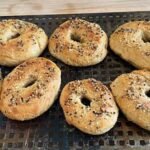
Don’t discard that discard! Transform your sourdough starter cast-off into chewy, golden-brown bagels with a satisfying tang. This recipe is designed for bakers looking to reduce waste while creating a bakery-quality breakfast staple. The long, slow fermentation develops incredible flavor, and the classic boil-and-bake method guarantees that perfect, shiny crust and dense, flavorful crumb. Say hello to your new weekend baking project.
Why You’ll Love This Recipe
Zero Waste: Gives your sourdough discard a delicious purpose.
Deep Flavor: Overnight cold fermentation builds complex, tangy notes.
Texture Perfection: Chewy crust, soft and airy interior.
Customizable: Endless topping possibilities for your perfect bagel.
Nutritional Information (Per Bagel)
Calories: ~285 kcal
Carbohydrates: 56g
Protein: 10g
Fat: 1.5g
Fiber: 2g
Sugar: 3g
Note: Nutrition is an estimate and does not include toppings.
Ingredients
For the Bagel Dough:
1 cup (240g) unfed sourdough discard (100% hydration, straight from the fridge is fine)
1 ¼ cups (300g) lukewarm water
4 cups (500g) bread flour (high-gluten flour is ideal)
2 tsp (10g) fine sea salt
1 tbsp (13g) barley malt syrup or honey
2 tsp (8g) instant yeast (optional, for a guaranteed rise and lighter texture)
For the Boiling Pot:
8 cups (2 quarts) water
2 tbsp barley malt syrup or honey
1 tbsp baking soda
For Topping (Optional):
Everything Bagel Seasoning
Sesame seeds
Poppy seeds
Coarse sea salt
Minced dried garlic or onion
Equipment Needed
Stand mixer with dough hook (or a strong arm and a large bowl)
Kitchen scale (recommended for accuracy)
Large mixing bowl
Plastic wrap or reusable bowl cover
Baking sheets (2)
Parchment paper
Slotted spoon or spider strainer
Large, wide pot (Dutch oven works well)
Step-by-Step Instructions
DAY 1: Mixing & First Fermentation (Active: 20 min | Inactive: 2-14 hours)
Combine Wet Ingredients: In the bowl of your stand mixer, combine the sourdough discard, lukewarm water, and barley malt syrup (or honey). Stir with a fork or whisk until the discard is mostly broken up and incorporated.
Mix Dry Ingredients: Add the bread flour and salt (and instant yeast, if using) on top of the wet mixture.
Knead the Dough: Using the dough hook attachment, mix on low speed until a shaggy dough forms, about 2-3 minutes. Increase speed to medium and knead for 8-10 minutes. The dough should be very stiff, smooth, and pull away cleanly from the sides of the bowl. It will be much firmer than typical bread dough. *(To knead by hand: mix in the bowl until combined, then turn out onto an unfloured surface and knead vigorously for 12-15 minutes until smooth and elastic.)*
Bulk Fermentation: Place the dough in a lightly oiled bowl, cover tightly, and let it rest at room temperature.
WITH Yeast: Let rise for 1-2 hours, until slightly puffy.
WITHOUT Yeast (Pure Sourdough): Let rise for 8-12 hours at cool room temperature (68-70°F/20-21°C) until visibly expanded and bubbly.
DAY 1 (Evening): Shape & Cold Ferment (Active: 15 min | Inactive: 8-12 hours)
Divide the Dough: Turn the dough out onto a clean, unfloured surface. Using a bench scraper or sharp knife, divide it into 8 equal pieces (about 110g each).
Shape the Bagels: Roll each piece into a tight, smooth ball. Press a floured thumb through the center of each ball to form a ring. Gently rotate the ring around your fingers, stretching the hole to about 1.5 – 2 inches in diameter. Place the shaped bagels on a parchment-lined baking sheet about 2 inches apart.
Cold Proof: Cover the baking sheet tightly with plastic wrap or a reusable cover and place it in the refrigerator for a minimum of 8 hours, or up to 24. This slow, cold fermentation is the secret to the best flavor.
DAY 2: Boil & Bake (Active: 25 min | Bake: 20-25 min)
Preheat & Prep: At least 30 minutes before baking, preheat your oven to 425°F (220°C) with racks in the upper and lower thirds. Bring the 8 cups of water, malt syrup/honey, and baking soda to a rolling boil in your large pot. Grease or line a second baking sheet with parchment.
Boil the Bagels: Remove bagels from the fridge. Working in batches of 2-3, gently drop the bagels into the boiling water. They will sink and then float. Boil for 45 seconds, flip with your slotted spoon, and boil for another 45 seconds. The longer the boil, the chewier the crust.
Add Toppings: Immediately after removing each bagel from the water, place it on a wire rack briefly to drain, then dip the top into your chosen seasoning blend or seeds. Place finished bagels back on the parchment-lined baking sheets.
Bake: Transfer the baking sheets to the preheated oven. Bake for 20-25 minutes, rotating the sheets top-to-bottom and front-to-back halfway through, until the bagels are deeply golden brown and sound hollow when tapped on the bottom.
Cool: Let the bagels cool on a wire rack for at least 30 minutes before slicing. This is crucial for the texture to set!
Chef’s Notes & Success Tips
Discard Consistency: Your discard can be thick or thin; the recipe accounts for the liquid. Using a scale ensures success regardless.
Yeast or No Yeast? Adding instant yeast is an “insurance policy” for a consistent, lighter rise, especially if your starter isn’t super active. For a pure sourdough experience with more tang, omit it—just know the rise may be slower and denser.
The Stiff Dough: Don’t be tempted to add more water. A very stiff dough is the hallmark of a proper bagel and gives it that signature chew.
The Boil: The baking soda in the boiling water (a.k.a. “lye water substitute”) is what gives bagels their distinctive shiny, crisp crust. Don’t skip it!
Storage: Keep in a paper bag at room temperature for 2 days. For longer storage, slice and freeze for up to 3 months. Toast straight from the freezer.

Hayyat is a talented content writer and digital marketer with expertise in SEO, social media management, and online marketing. She excels at creating impactful, data-driven content to help businesses connect with their target audience and achieve measurable outcomes.