Yields: 1 large loaf
Prep Time: 30 minutes (active)
Rise Time: 12-16 hours (mostly hands-off)
Bake Time: 45-50 minutes
Total Time: 13-17 hours
Recipe Intensity: Advanced
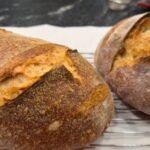
There’s nothing quite like the aroma of freshly baked bread filling your home, especially when it’s infused with the earthy fragrance of rosemary and the savory punch of roasted garlic. This Rosemary Garlic Sourdough Bread is an artisan-style loaf with a crisp, blistered crust and an open, airy crumb. While sourdough baking requires patience and practice, the result is a deeply flavorful, wholesome bread that is worth every minute. This recipe guides you through the entire process, from feeding your starter to pulling a golden, glorious loaf from the oven.
The Flavor Profile
The combination of fresh rosemary and roasted garlic is a classic for a reason. The rosemary provides a piney, aromatic quality that cuts through the tangy sourdough base, while the roasted garlic mellows into a sweet, nutty, and deeply savory flavor that permeates every bite. Unlike raw garlic, roasted garlic won’t overpower the bread or leave a harsh aftertaste, creating a perfectly balanced and sophisticated loaf.
Ingredients
For the Roasted Garlic:
-
1 whole head of garlic
-
1 teaspoon olive oil
-
A pinch of salt
For the Leaven:
-
30g active, bubbly sourdough starter
-
60g bread flour
-
60g warm water
For the Main Dough:
-
450g bread flour (high protein, around 12-14%)
-
50g whole wheat flour (for added flavor and texture)
-
350g warm water (around 80-85°F / 27-29°C)
-
100g active leaven (from above)
-
10g fine sea salt
-
2 tablespoons (about 8g) fresh rosemary, finely chopped
Equipment
-
Digital kitchen scale (essential for accuracy)
-
Large mixing bowl
-
Bench scraper
-
Proofing basket (banneton) or a bowl lined with a floured tea towel
-
Razor blade or sharp knife (lame) for scoring
-
Dutch oven (highly recommended for the best crust)
Instructions
Part 1: Preparation (The Day Before Baking)
Intensity: Low | Time: 15 minutes active, 45 minutes hands-off
1. Roast the Garlic:
Preheat your oven to 400°F (200°C). Slice the top off the head of garlic to expose the cloves. Drizzle with olive oil, sprinkle with salt, and wrap tightly in aluminum foil. Roast for 40-45 minutes, or until the cloves are soft, golden, and easily squeezed out. Let it cool completely. Once cool, squeeze the softened cloves into a small bowl and mash with a fork into a rough paste. Set aside.
2. Create the Leaven:
About 8-12 hours before you plan to mix your dough, prepare the leaven. In a small jar or bowl, combine the 30g of active starter, 60g of flour, and 60g of warm water. Mix thoroughly, cover loosely, and let it sit at room temperature. It is ready when it has doubled in size, is full of bubbles, and passes the “float test”: a small spoonful of leaven should float in a glass of water.
Part 2: Mixing and Bulk Fermentation
Intensity: Medium | Time: 30 minutes active, 4-5 hours hands-off
1. Autolyse:
In a large mixing bowl, whisk together the 450g bread flour and 50g whole wheat flour. Add the 350g warm water and mix until no dry bits of flour remain. The dough will be shaggy. Cover the bowl and let it rest (autolyse) for 45-60 minutes. This allows the flour to fully hydrate and makes the dough easier to work with.
2. Mix the Dough:
Add the 100g of active leaven to the top of the autolysed dough. Use wet hands to dimple the leaven into the dough, then squeeze and fold the dough over itself for 2-3 minutes until the leaven is fully incorporated. Rest the dough, covered, for another 30 minutes.
3. Incorporate Salt and Add-ins:
Sprinkle the 10g of salt over the dough. Add the mashed roasted garlic and chopped rosemary. Again, using wet hands, dimple and fold the ingredients into the dough. It will feel wet and slippery at first, but keep folding until everything is evenly distributed. This should take about 3-4 minutes.
4. Bulk Fermentation:
This is the first major rise. Cover the bowl and let the dough rest at room temperature (ideally 75-78°F / 24-26°C) for 3-4 hours. During this time, you will perform a series of “stretch and folds” to build strength in the dough.
-
Every 30 minutes for the first 2 hours, perform a set of stretch and folds. With a wet hand, reach under one side of the dough, stretch it up, and fold it over the center. Rotate the bowl a quarter turn and repeat three more times until you’ve folded all four sides.
Part 3: Shaping and Cold Proof
Intensity: Medium | Time: 20 minutes active, 12-16 hours hands-off
1. Pre-shape and Bench Rest:
Lightly flour your work surface. Gently turn the dough out onto the surface. Using your bench scraper, shape the dough into a loose round. Cover with the inverted bowl or a towel and let it rest for 25-30 minutes. This relaxes the gluten for final shaping.
2. Final Shaping:
Lightly flour your proofing basket (use rice flour if you have it to prevent sticking). Flip the dough over so the smooth side is facing down. Gently stretch the dough into a rectangle. Fold the bottom third up to the center, then the left and right sides over the center. Finally, roll the dough from top to bottom into a tight loaf. Place the dough seam-side up into the prepared proofing basket.
3. Cold Proof:
Cover the basket with a plastic bag or shower cap and place it in the refrigerator for 12-16 hours (overnight). This slow fermentation develops the signature sourdough tang and improves the bread’s texture.
Part 4: Baking
Intensity: Medium | Time: 1 hour
1. Preheat the Oven:
Place your Dutch oven, with the lid on, into your oven. Preheat to 500°F (260°C) for at least 45 minutes to an hour. It needs to be screaming hot.
2. Score and Bake:
Carefully remove the hot Dutch oven. Turn your proofed dough out onto a piece of parchment paper. Using a razor blade (lame), make one confident, swift slash about ½-inch deep along the top of the loaf. This allows the bread to expand beautifully in the oven (this is called “oven spring”).
Lift the dough by the parchment paper and carefully lower it into the hot Dutch oven. Put the lid back on.
3. Bake Covered:
Bake with the lid on at 500°F (260°C) for 20 minutes. This traps steam, creating a crisp, glossy crust.
4. Bake Uncovered:
Reduce the oven temperature to 450°F (230°C). Remove the lid from the Dutch oven. Continue baking for another 25-30 minutes, or until the crust is a deep, golden brown.
5. Cool Completely:
This is the hardest but most crucial step! Transfer the bread to a wire cooling rack and let it cool completely for at least 3-4 hours before slicing. The bread is still cooking internally from residual heat, and slicing it warm will result in a gummy texture.
Nutrition Information
-
Serving Size: 1 slice (based on 12 slices per loaf)
-
Calories: 180 kcal
-
Total Fat: 0.5g
-
Saturated Fat: 0.1g
-
Sodium: 325mg
-
Total Carbohydrates: 37g
-
Dietary Fiber: 2g
-
Sugars: 0.2g
-
Protein: 6g
Note: Nutritional information is an estimate and may vary based on specific ingredients used.
The Last of the Recipe: Storage and Enjoyment
Your freshly baked Rosemary Garlic Sourdough Bread is best enjoyed within 2-3 days stored at room temperature in a bread bag or wrapped in a tea towel. The crust will soften over time, but you can re-crisp it by placing a slice directly in a toaster or reheating the whole loaf in a 350°F (175°C) oven for 10 minutes.
For longer storage, slice the cooled bread and freeze it in a freezer-safe bag for up to 3 months. Simply pop frozen slices straight into the toaster. This bread makes exceptional toast, is perfect for hearty sandwiches, and is sublime simply slathered with good butter. Enjoy the fruits of your labor

Hayyat is a talented content writer and digital marketer with expertise in SEO, social media management, and online marketing. She excels at creating impactful, data-driven content to help businesses connect with their target audience and achieve measurable outcomes.