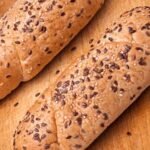
Bake adorable, tangy Mini Sourdough Slider Loaves perfect for parties, sliders, or individual servings. This detailed recipe includes timelines, intensity levels, and full nutrition facts.
Prep Time: 30 minutes (active)
Cook Time: 20-25 minutes
Proofing Time: 8-12 hours (mostly hands-off)
Total Time: 9-13 hours
Skill Level: Intermediate (requires an active sourdough starter)
Yield: 12 mini loaves
There’s something incredibly charming about individual-sized breads. These Mini Sourdough Slider Loaves are not just charming; they are a game-changer for entertaining. Imagine a gathering where everyone gets their own perfectly crusty, tangy, and soft sourdough bun to fill with their favorite ingredients. No more awkward slicing or uneven shares! While sourdough has a reputation for being complex, this recipe breaks it down into manageable steps, focusing on a slow, cold fermentation that develops incredible flavor with minimal active effort. The result is a batch of stunning mini loaves that will be the star of any meal.
The Soul of the Recipe: Understanding Time & Intensity
Sourdough is a journey, not a race. The “intensity” of this recipe is front-loaded in the initial mixing and shaping stages, with long, passive resting periods in between. This makes it perfect for a weekend project. You’ll mix the dough one evening, let it ferment overnight in the fridge, and then bake them fresh the next day for lunch or dinner.
-
High Intensity (Hands-On): Mixing, Stretch & Folds, Dividing, Shaping (approx. 45 minutes total active time).
-
Low Intensity (Hands-Off): Bulk Fermentation, Cold Proofing (8-12 hours of waiting).
Don’t be intimidated by the timeline; the waiting does all the work for you, developing that signature sourdough tang and an open, airy crumb.
Ingredients
| Quantity | Ingredient | Notes |
|---|---|---|
| 100 g | Active Sourdough Starter | Bubbly and at its peak, not recently fed. |
| 375 g | Warm Water (approx. 85°F/29°C) | |
| 500 g | Bread Flour | Provides the necessary strength and chew. |
| 10 g | Fine Sea Salt | |
| For Topping | Rice Flour | Optional, for dusting. Prevents burning and gives a professional look. |
| For Topping | Sesame Seeds, Everything Bagel Seasoning, or Rolled Oats | Optional, for garnish. |
Equipment Needed
-
Digital Kitchen Scale (highly recommended for accuracy)
-
Large Mixing Bowl
-
Bench Scraper
-
Plastic Wrap or reusable cover
-
Parchment Paper
-
Baking Sheet
-
Sharp Razor Blade or Lame (for scoring)
-
12-Cavity Mini Loaf Pan (or a standard muffin tin can work in a pinch)
Step-by-Step Instructions
Step 1: The Autolyse (15 minutes)
In your large mixing bowl, whisk together the 500g of bread flour and 375g of warm water until no dry bits remain. The dough will be shaggy and sticky. Cover the bowl and let it rest for 15-30 minutes. This autolyse period allows the flour to fully hydrate, making the dough smoother and easier to work with later.
Step 2: Mix the Dough (5 minutes)
Add the 100g of active starter and 10g of salt to the hydrated flour mixture. Use your hands or a spatula to mix thoroughly until everything is fully incorporated. The dough will be sticky and slack—this is normal.
Step 3: Bulk Fermentation & Stretch & Folds (3-4 hours)
This is the first rise. Cover the bowl and let the dough rest at room temperature (70-75°F / 21-24°C is ideal).
Over the next 2-3 hours, you will perform a series of “stretch and folds” to build strength in the dough.
-
Every 30 minutes for the first 2 hours, wet your hand, grab one side of the dough, stretch it upwards, and fold it over the center. Rotate the bowl a quarter turn and repeat three more times until you’ve folded all four “sides.”
-
After the last set of folds, let the dough rest, covered, for the remainder of the bulk fermentation (another 1-2 hours). The dough should look puffy and have increased in volume by about 30-50%. It may have some visible bubbles on the surface.
Step 4: Shape & Cold Proof (8-12 hours)
Lightly flour your work surface. Gently turn the dough out onto it. Using your scale and a bench scraper, divide the dough into 12 equal pieces (each should be about 80-85 grams).
Shaping each mini loaf: Take one piece. Gently flatten it into a small rectangle. Fold the top third down to the center and press gently. Fold the bottom third up, like a letter. Then, roll the dough from left to right (or right to left) into a tight little log. Pinch the final seam to seal. Place each shaped loaf seam-side down into a cavity of your greased or parchment-lined mini loaf pan.
Once all loaves are shaped, cover the entire pan loosely with a damp tea towel or plastic wrap. Place the entire pan in the refrigerator for 8-12 hours (overnight is perfect). This long, cold fermentation is crucial for developing the classic sourdough flavor.
Step 5: Preheat and Score (20 minutes)
The next day, preheat your oven to 450°F (230°C). Place a rack in the center position. Remove the pan from the fridge. The loaves may not look like they’ve risen much, but they are ready to bake.
For a professional touch, you can lightly dust the tops with rice flour and make a single, shallow slash (about ¼ inch deep) down the center of each loaf with a sharp blade. This “scoring” allows the steam to escape and controls the expansion of the bread in the oven, creating a beautiful “ear.”
Step 6: Bake (20-25 minutes)
Place the pan in the preheated oven. Bake for 20-25 minutes, or until the loaves are deeply golden brown and sound hollow when tapped on the bottom. If you have an instant-read thermometer, the internal temperature should read at least 205°F (96°C).
Step 7: Cool (30 minutes minimum)
This is the hardest part! Immediately remove the mini loaves from the pan and transfer them to a wire cooling rack. Let them cool completely for at least 30 minutes before slicing. The bread is still cooking internally from residual heat, and slicing it too early will result in a gummy texture.
Nutrition Information (Per Mini Loaf)
-
Servings: 1 mini loaf (approx. 85g)
-
Calories: 175 kcal
-
Carbohydrates: 35 g
-
Protein: 6 g
-
Fat: 0.5 g
-
Saturated Fat: 0 g
-
Polyunsaturated Fat: 0 g
-
Monounsaturated Fat: 0 g
-
Trans Fat: 0 g
-
Cholesterol: 0 mg
-
Sodium: 325 mg
-
Potassium: 40 mg
-
Fiber: 1 g
-
Sugar: 0 g
-
Vitamin A: 0 IU
-
Vitamin C: 0 mg
-
Calcium: 8 mg
-
Iron: 0.4 mg
Note: Nutritional information is an estimate and can vary based on specific ingredients used.
The Last Slice: Serving and Storing
These Mini Sourdough Slider Loaves are incredibly versatile. Slice them horizontally for the ultimate slider bun, perfect for pulled pork, burgers, or chicken salad. They are also fantastic served alongside soup or salad, or simply toasted and slathered with butter and jam.
To store, place cooled loaves in a paper bag at room temperature for up to 2 days for best crust texture. For longer storage, keep them in an airtight container or plastic bag for up to 4 days (the crust will soften). They also freeze beautifully for up to 3 months. Simply thaw at room temperature and warm in the oven to refresh.
Enjoy the process and the delicious results of your homemade Mini Sourdough Slider Loaves

Hayyat is a talented content writer and digital marketer with expertise in SEO, social media management, and online marketing. She excels at creating impactful, data-driven content to help businesses connect with their target audience and achieve measurable outcomes.