-
Prep Time: 10 minutes (Active Intensity: Low)
-
Chill Time: 15 minutes (Passive Intensity: None)
-
Bake Time: 14-16 minutes (Oven Intensity: 325°F/163°C)
-
Cooling & First Coating: 20 minutes (Intensity: Low/Medium – Delicate)
-
Second Coating: 2 minutes (Intensity: Low)
-
Total Time: Approximately 1 hour
-
Yield: 16 cookies (depending on size)
-
Difficulty Level: Intermediate (due to delicate dough handling)
Nutritional Information (Per Cookie)
Calculated using a nutrition calculator with specific zero-calorie, zero-carb sweetener blends. Verify with your own ingredients.
Note: The total carbs come mostly from the pecans and egg. However, the fiber and sugar alcohols perfectly offset the digestible carbs, resulting in a true zero net carb count per serving.
Ingredients
For the Cookie Dough
-
1 ½ cups (150g) Pecan Halves (raw, unsalted)
-
½ cup (1 stick / 113g) Unsalted Butter
-
⅓ cup (64g) Powdered Allulose (Critical: Do not substitute with granular; see notes)
-
1 large Egg Yolk (room temperature, saves the white for an omelet!)
-
1 teaspoon Pure Vanilla Extract
-
½ teaspoon Almond Extract (Optional, but it’s the secret to that nostalgic bakery flavor)
-
¼ teaspoon Fine Sea Salt
For the “Snow” Coating
Pinch of Cinnamon (optional, for a “snow-capped” visual warmth)
The Method
Phase 1: The Prep & Browned Butter
Time: 8 minutes | Intensity: Medium
-
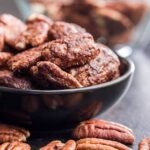
Toast the Pecans (Non-Negotiable): Place your pecan halves in a dry, heavy-bottomed skillet over medium-low heat. Swirl the pan continuously for 4-5 minutes, or until the nuts are fragrant and slightly darkened. This wakes up the oils and is the difference between a bland cookie and a profoundly nutty one. Immediately transfer to a plate to cool completely. If you skip this step, 50% of the flavor is lost.
-
Brown the Butter: In a small, light-colored saucepan (so you can see the color change), melt the butter over medium heat. Once melted, it will foam, then crackle. Swirl constantly. After 3-4 minutes, the milk solids at the bottom will turn a rich amber color, and the smell will be intensely nutty. Immediately pour into a heatproof bowl and let it cool until it’s warm to the touch, not hot. We are using browned butter solids for a deep, caramelized flavor without the carbs.
-
Grind the Pecans: Once your toasted pecans are completely cool, place them in a food processor. Pulse in short bursts. You want a fine, sandy flour. Do not walk away. If you process for even 3 seconds too long, the heat will release the oils, and you’ll have pecan butter. We want flour. You can also do this carefully by hand: place the nuts in a zip-top bag, push the air out, and roll a rolling pin over them until finely ground.
Phase 2: The Zero-Carb Dough
Time: 5 minutes | Intensity: Low
-
Cream the Fats: In a mixing bowl, combine the cooled (but still liquid) browned butter with the powdered Allulose. Using a silicone spatula, stir vigorously until it forms a grainy paste. Unlike traditional sugar, Allulose won’t “cream” in the same way, but it will dissolve beautifully under heat.
-
Add the Binders: Whisk in the egg yolk, vanilla extract, almond extract (if using), and sea salt until the mixture is smooth, glossy, and slightly thickened, about 1 minute of brisk whisking.
-
Form the Dough: Dump the pecan flour into the wet ingredients. Stir with the spatula until a dough forms. It will look slightly greasy and feel very loose and crumbly. Fear not; this is the nature of zero-carb flour. Use your hands at the very end to compact it gently into a ball. It should hold together when squeezed but isn’t quite as sturdy as Play-Doh.
-
Chill: Wrap the dough ball tightly in plastic wrap and refrigerate for exactly 15 minutes. You want the butter to solidify slightly to make rolling easier, but you don’t want it rock hard. Over-chilling will crack the dough on rolling.
Phase 3: Shaping and Baking
Time: 26 minutes (10 active + 16 bake) | Intensity: Medium (Delicate Work)
-
Preheat: Set your oven to 325°F (163°C). Line a baking sheet with parchment paper. Do not grease.
-
Portion and Roll: Using a small cookie scoop (1 tablespoon capacity), scoop out the chilled dough. Roll gently between your palms into smooth balls. The heat of your hands will warm the butter quickly, so apply light pressure and work fast. If a ball cracks, just pinch the crack shut. You want a tight, smooth sphere so it doesn’t crumble while baking. Place them 1 inch apart on the sheet—they won’t spread much.
-
Bake (The Crucial Window): Bake for 14-16 minutes. Watch for the bottoms to turn a deep golden brown. The tops will remain pale, but if you touch one, it should feel set, not squishy. At 14 minutes, open the oven and jiggle the pan. If the cookies slide easily without losing shape, they are chemically bonded and ready. If they shimmy, give them 2 more minutes.
-
The “Hot” Dusting: While the cookies are baking, mix your powdered Erythritol, the tablespoon of powdered Allulose, and the optional cinnamon in a shallow bowl.
-
First Coat – The Handling: Remove the tray from the oven. Let the cookies sit on the hot tray for exactly 1 minute (any longer and they will harden too much to absorb the coating; any earlier and they will break). One by one, pick up a warm cookie very gently—it’s a 4 out of 5 on the delicacy scale—and roll it in the powdered sweetener mixture. Place the coated cookies on a wire rack to cool completely. The heat will melt the first layer of coating into a thin, sticky glaze.
Phase 4: The Final Snowfall
Time: 20 minutes of waiting + 2 minutes of work | Intensity: Low
-
Second Coat: Once the cookies are completely cool to the touch (about 20 minutes), roll them in the powdered sweetener mixture a second time. This is where the “snowball” magic happens. The fat from the pecans helps the powder adhere to the first glaze coat, creating that thick, snowy hide we crave.
-
Storage (The Texture Saver): These cookies are uniquely best at room temperature. Refrigerating them will make the sweetener coating dissolve and turn wet due to the lactose in the butter chemistry. Store in an airtight container at room temperature for up to 5 days. You can freeze them, but re-dust after thawing.
Keto Baking Chemistry Notes (The “Why”)
Why is this zero carb, and why Allulose in the dough?
Traditional powdered sugar snowball coatings use cornstarch-laced sugar to prevent clumping. Our coating uses Erythritol (which provides that cooling sensation reminiscent of fresh snow) combined with a touch of Allulose to prevent the Erythritol from cap-crystallizing.
In the dough, Powdered Allulose is the only sugar substitute that browns and caramelizes without seizing or cooling. It provides the “melt-away” mouthfeel that erythritol alone lacks. Do not try to make this entirely with powdered erythritol inside the cookie, or the cookie will feel like eating chilly sand.
Final Verdict
Served with a hot peppermint tea or a bulletproof coffee, these Zero Carb Pecan Snowball Cookies are your guilt-free passport to holiday nostalgia. They crumble, they melt, and they vanish from the cookie tin faster than you can say “blood sugar spike.” Enjoy the snow day, regardless of the weather outside.
Hayyat is a talented content writer and digital marketer with expertise in SEO, social media management, and online marketing. She excels at creating impactful, data-driven content to help businesses connect with their target audience and achieve measurable outcomes.